Most people believe one dangerous thing:
“If I’m really sick, my body will clearly tell me.”
That belief is wrong.
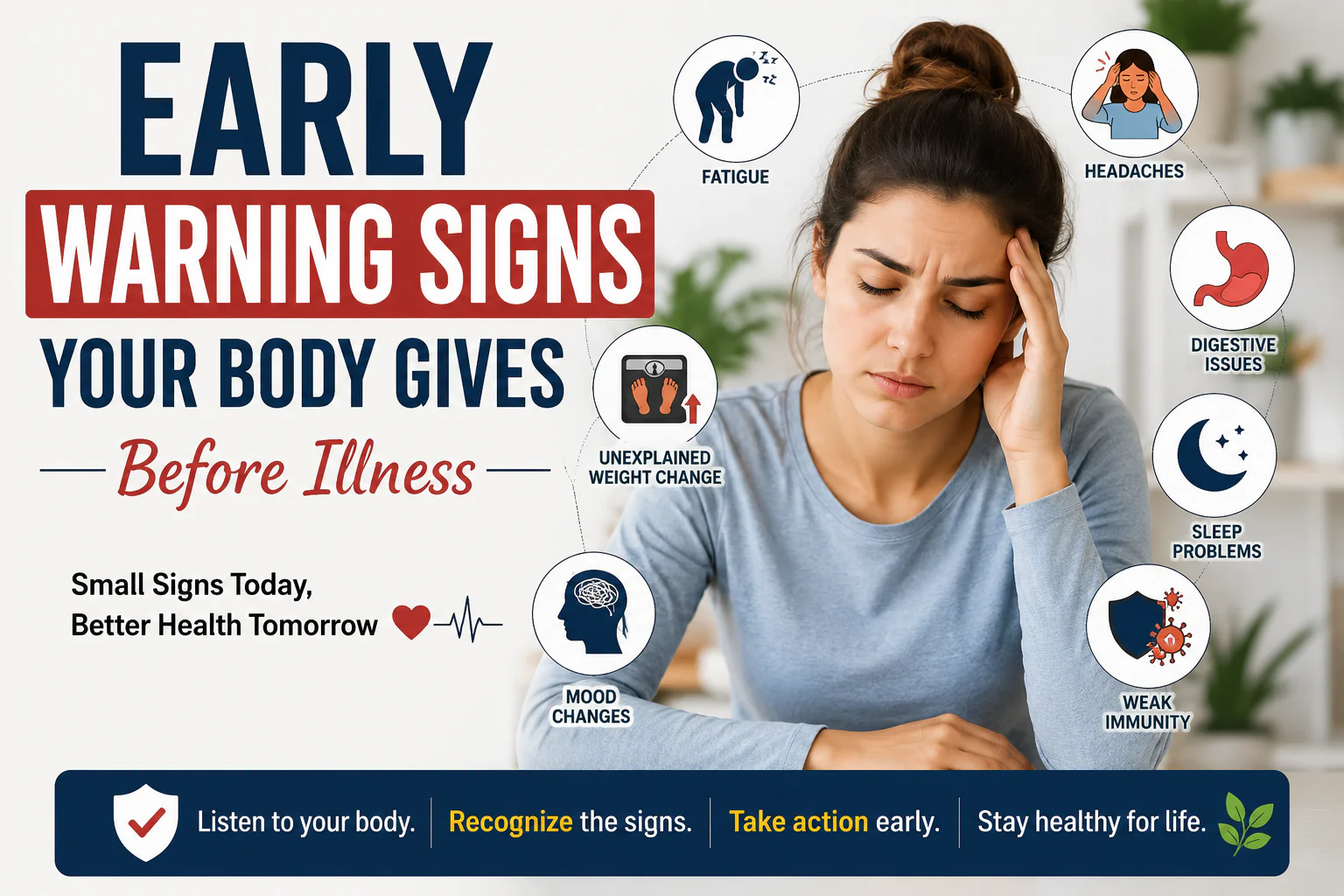
In reality, your body almost never hits you with illness suddenly. It whispers first. Soft signals. Small changes. Subtle symptoms. These are the early warning signs your body gives before illness, but most people ignore them because they don’t look serious.
We wait for pain.
We wait for fever.
We wait for something “big.”
By the time that happens, the illness is already settled in.
Your body is smart. It always tries to protect you. Long before disease shows up on reports, your body sends early health warning signs to get your attention. The problem? We are too busy, too distracted, or too careless to listen.
This is why understanding early signs your body shows before disease matters more than any medicine.
1.1 Why Ignoring Early Warning Signs Your Body Gives Before Illness Is a Big Mistake
Those small symptoms you brush off?
They are not random.
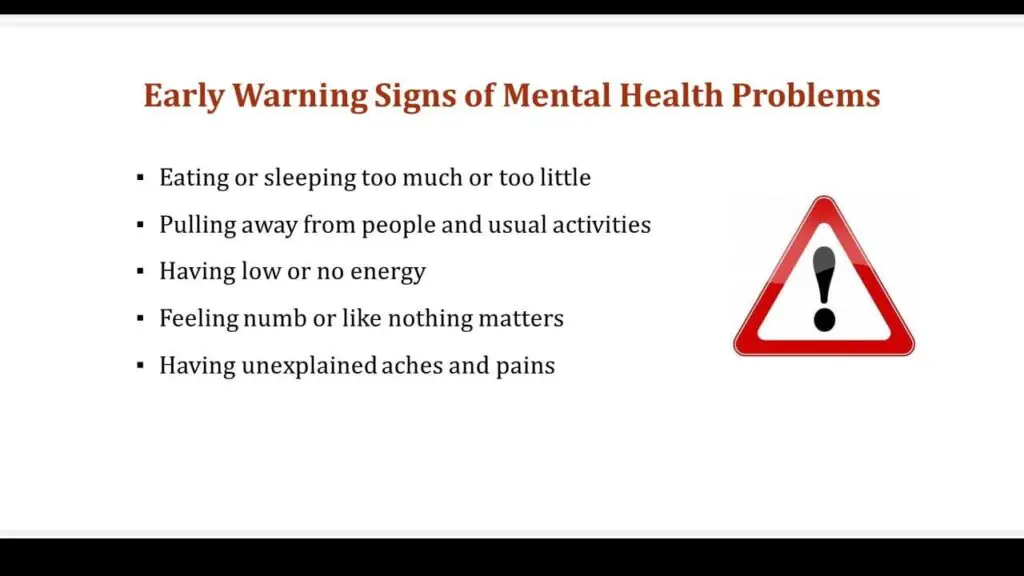
Things like constant fatigue, poor sleep, digestion issues, or mood changes are often early symptoms your body gives before sickness. They don’t come to scare you. They come to warn you.
Ignoring these body warning signs of illness allows problems to grow silently. What could have been fixed with small lifestyle changes slowly turns into chronic disease, weak immunity, or long-term damage.
Early illness detection is not about fear.
It’s about control.
When you listen early, you act early. And early action saves health.
1.2 How Your Body Sends Warning Signals Long Before Disease Starts
Your body doesn’t speak words.
It speaks through signals.
These signals appear as:
- Changes in energy
- Changes in appetite
- Changes in sleep
- Changes in digestion
- Changes in mood
- Changes in skin, hair, or weight
These are body signals before sickness, not random events.
Before any disease fully develops, your body goes out of balance first. Hormones shift. Immunity weakens. Inflammation starts quietly. That’s when early warning symptoms show up.
Think of it like this:
Illness is not a switch. It’s a process.
And your body always alerts you during that process.
1.3 The Real Problem: Most People Ignore Early Symptoms Before Illness
Here’s the harsh truth.
Most people don’t ignore warning signs because they don’t care.
They ignore them because:
- “It’s just stress”
- “Everyone feels tired”
- “It will go away”
- “I’m too young for illness”
This mindset is exactly why silent signs of disease go unnoticed.
Early physical symptoms don’t always look dramatic. They look normal. That’s what makes them dangerous. These are the subtle signs of illness that slowly damage the body while you keep living your routine life.
By the time people take symptoms seriously, the disease is no longer early.
1.4 What You’ll Learn in This Guide (And Why It Can Save Your Health)
This guide is not here to scare you.
It’s here to educate you.
You’ll learn:
- How to recognize early warning signs before illness
- How to understand body warning signals
- How to tell the difference between normal tiredness and early disease symptoms
- Why listening early can prevent serious health problems
Your body gives you clues every day.
Once you learn how to read them, you stop being helpless.
How Your Body Warns You Before Illness Starts
Let’s clear something up.
Your body doesn’t suddenly fail.
It slowly moves out of balance first.
That imbalance shows up as early health warning signs, and they are consistent across most people. The form may change, but the message is the same:
“Something is not right.”
Understanding how these warning signs work is the foundation of early disease prevention.
2.1 Understanding Body Warning Signs of Illness in Simple Words
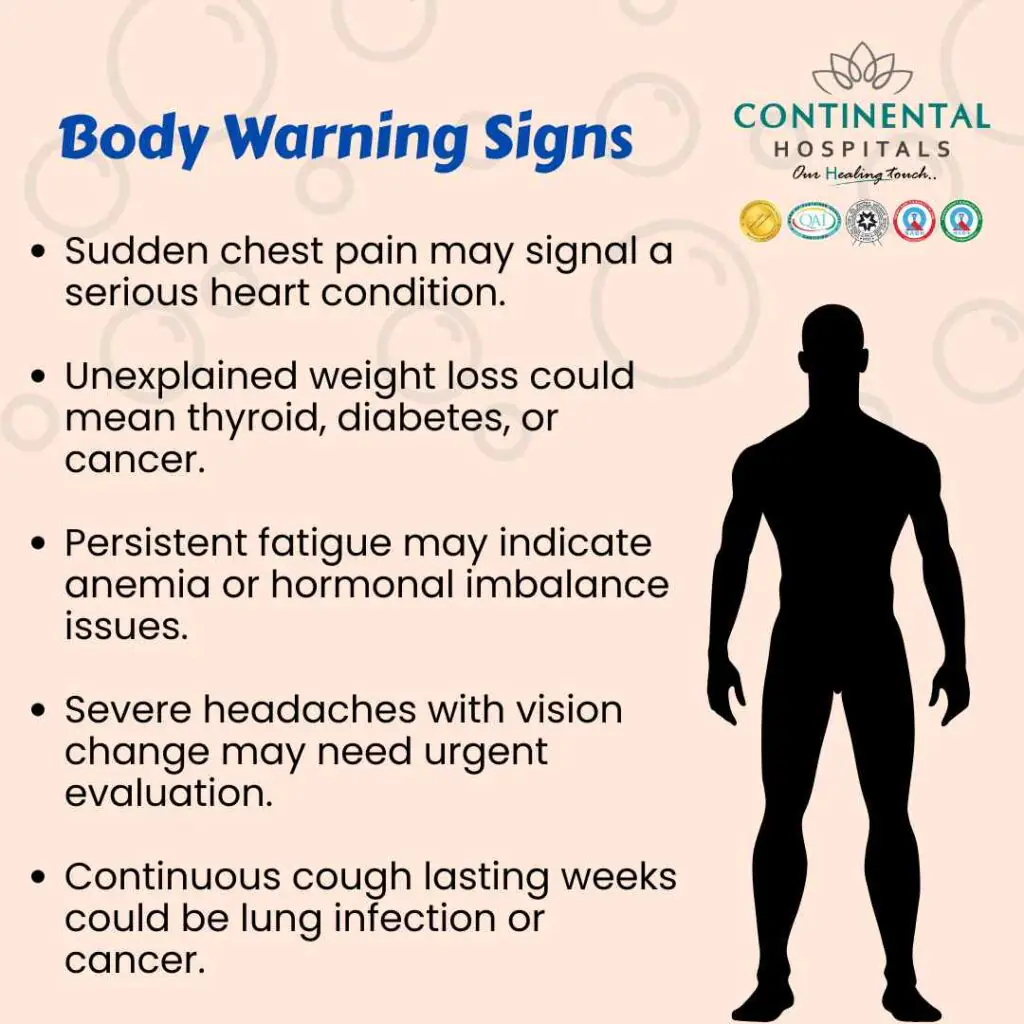
A body warning sign is any unusual change that lasts longer than expected.
It could be:
- Feeling tired even after rest
- Getting sick more often
- Digestive issues that don’t settle
- Sleep problems without a clear reason
These are early indicators of health problems, not random bad days.
Your body is constantly trying to maintain balance. When it can’t, it sends alerts. These alerts are not pain at first. They are discomfort, changes, and patterns.
That’s why awareness matters more than intensity.
2.2 Early Signs Your Body Shows Before Disease Develops
Before disease becomes visible, the body reacts internally.
Common early signs of disease in the body include:
- Low energy without heavy work
- Brain fog and poor focus
- Changes in hunger or cravings
- Frequent infections or slow recovery
These are early body signals of disease, especially related to immunity, hormones, and metabolism.
Many chronic illnesses begin this way. Quiet. Slow. Hidden.
If you wait for pain, you wait too long.
2.3 Why Symptoms Appear Before a Serious Illness
Symptoms exist for one reason:
to protect you.
When the body senses something wrong, it tries to fix it. Symptoms are part of that repair process. They force you to slow down, adjust habits, or seek help.
These warning signs your body gives when something is wrong are not the enemy. Ignoring them is.
The body doesn’t want disease.
It wants balance.
That’s why early symptoms appear long before serious illness.
2.4 The Science Behind Early Detection of Illness
From a biological point of view, illness develops in stages:
- Imbalance
- Stress response
- Functional symptoms
- Structural damage
Most people only notice stage 4.
But early illness detection happens in stage 2 and 3 — when the damage is still reversible.
That’s where early warning signs before illness play their role. Catching symptoms early gives the body a chance to heal before permanent damage occurs.
This is why preventive health works.
2.5 Difference Between Normal Tiredness and Early Health Warning Signs
Not every bad day is a warning sign.
But patterns are.
Normal tiredness:
- Improves with rest
- Comes after effort
- Doesn’t affect mood or focus much
Warning fatigue:
- Stays even after sleep
- Affects daily life
- Comes with other symptoms
This difference helps you identify early symptoms before illness instead of brushing them off.
Your body repeats signals when you don’t listen the first time.
Why Early Warning Signs Should Never Be Ignored
Most people believe this:
“If something was seriously wrong, the symptoms would be obvious.”
That belief silently destroys health.
The truth is, the most dangerous illnesses don’t shout.
They whisper.
These whispers are the early warning signs your body gives before illness, and ignoring them is one of the biggest health mistakes people make.
3.1 What Happens When Early Symptoms Before Illness Are Ignored
When early symptoms show up, your body is asking for support, not panic.
But when you ignore:
- constant fatigue
- digestive discomfort
- poor sleep
- low immunity
your body doesn’t stop sending signals.
It simply raises the volume.
What starts as subtle signs of illness slowly becomes stronger warning symptoms. This is how small health issues turn into long-term problems.
Early symptoms are easy to manage.
Late symptoms are expensive, painful, and stressful.
3.2 How Minor Symptoms Turn Into Major Health Problems
No serious illness appears overnight.
It starts with:
- imbalance
- stress
- inflammation
- immune weakness
Those “minor” issues you ignore are actually early indicators of health problems. Over time, the body adapts to stress until it can’t anymore.
This is why people often say:
“I don’t know how this happened so suddenly.”
It wasn’t sudden.
The warning signs were there.
3.3 Silent Signs of Disease That Damage the Body Slowly
Some of the most dangerous symptoms don’t cause pain.
These silent signs of disease include:
- low energy without reason
- brain fog
- frequent infections
- slow healing
These are body warning signals that often get ignored because they don’t feel urgent.
Silent damage continues quietly until it becomes impossible to ignore.
3.4 Early Illness Detection vs Late Diagnosis
Early illness detection gives you options.
Late diagnosis gives you limitations.
When warning signs are noticed early:
- lifestyle changes work
- immunity improves
- disease progression slows
Late diagnosis usually means medication, procedures, or long recovery.
That’s the power of noticing early warning signs before illness instead of waiting for pain.
3.5 Real-Life Examples of Warning Signs Your Body Gives When Something Is Wrong
People often look back and realize:
- “I was tired all the time”
- “My digestion was never right”
- “I kept getting sick”
- “I wasn’t sleeping properly”
These were not random issues.
They were early symptoms your body gives before sickness.
Your body always gives hints. The only question is whether you listen.
Most Common Early Warning Signs Your Body Gives Before Illness
Here’s another common myth:
“Early warning signs look dramatic.”
They don’t.
Most early warning signs look normal, which is why people ignore them. Below are the most common early signs your body shows before disease, explained in simple words.
4.1 Constant Fatigue and Low Energy
Feeling tired after work is normal.
Feeling tired all the time is not.
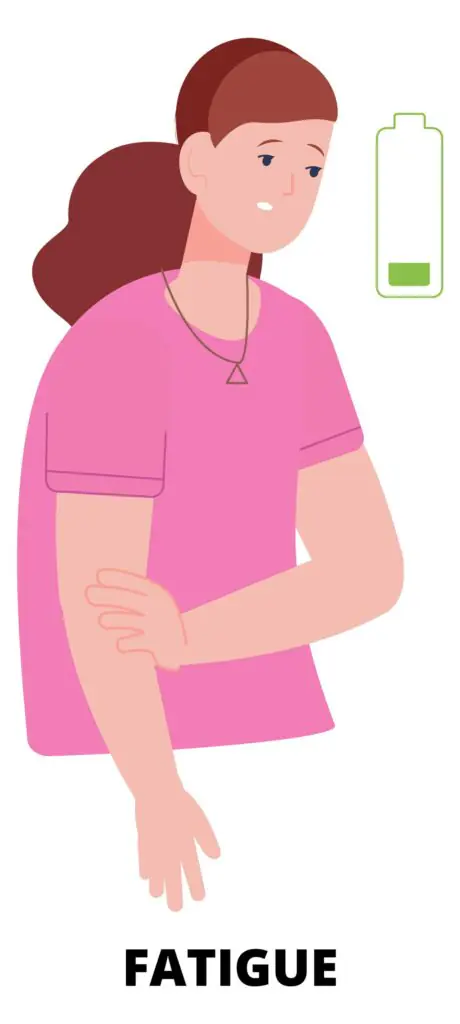
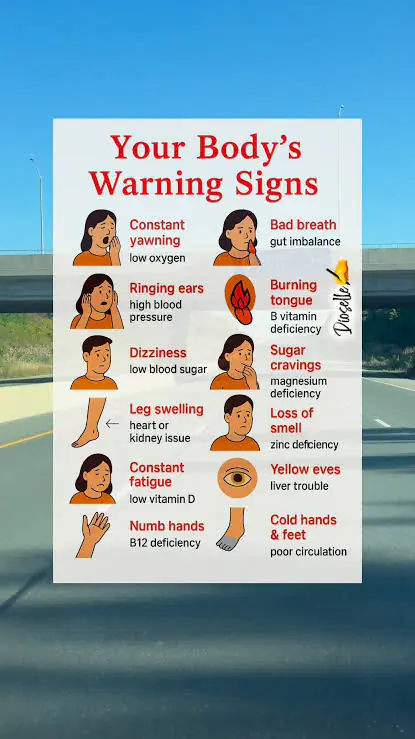
Persistent fatigue is one of the strongest early health warning signs. It often means:
- weak immunity
- hormonal imbalance
- poor nutrient absorption
If rest doesn’t fix your tiredness, your body is sending a message.
This is not laziness.
It’s a body warning sign of illness.
4.2 Unexplained Weight Loss or Weight Gain
Weight changes without diet or exercise changes are never random.
Unexplained weight gain or loss is one of the clearest body changes before illness starts. It can signal:
- metabolic issues
- hormonal imbalance
- digestive problems
These are early symptoms before illness, not cosmetic issues.
Your weight often changes before disease becomes visible.
4.3 Frequent Headaches or Body Pain
Occasional pain is normal.
Frequent pain is a signal.
Recurring headaches, joint pain, or muscle aches are physical warning signs you shouldn’t ignore. They often indicate:
- inflammation
- stress overload
- immune imbalance
Pain is the body’s way of saying:
“Something needs attention.”
4.4 Digestive Issues You Keep Ignoring
Your gut reflects your overall health.
Bloating, gas, constipation, or diarrhea are some of the most ignored early warning symptoms. Many people live with digestive discomfort for years without realizing it’s a sign.
These issues are often early indicators of health problems, especially related to immunity and nutrient absorption.
A disturbed gut always shows up before major illness.
4.5 Changes in Sleep Patterns
Sleep problems are not just “stress.”
Difficulty falling asleep, waking up tired, or disturbed sleep are early warning signs before illness, especially related to hormones and nervous system balance.
Poor sleep weakens immunity.
Weak immunity invites illness.
That’s why sleep changes are powerful body alerts before sickness
1. What are the most common early warning signs your body gives before illness?
The most common early warning signs include constant fatigue, poor sleep, frequent headaches, digestive issues, unexplained weight changes, and getting sick often. These signs look normal at first, but when they happen repeatedly, they are your body’s way of warning you before illness starts.
2. Can early warning signs really appear before a serious illness?
Yes, absolutely. Most serious illnesses don’t appear suddenly. The body shows early symptoms weeks or even months before disease develops. These early signs are your chance to fix the problem before it becomes serious.
3. How do I know if a symptom is serious or just normal tiredness?
Normal tiredness improves with rest. Warning fatigue doesn’t. If a symptom stays for days or weeks, affects your daily life, or comes with other issues like poor sleep or low immunity, it’s likely an early warning sign your body is giving.
4. Why do people ignore early symptoms before illness?
Most people ignore early symptoms because they look small and harmless. Busy life, stress, and the belief that “it will go away” make people delay action. Sadly, ignoring these signs often leads to bigger health problems later.
5. What should I do when I notice early warning signs in my body?
First, don’t panic. Start by observing patterns, improving sleep, diet, and stress levels. If symptoms don’t improve or keep coming back, it’s important to consult a healthcare professional early. Early action can prevent serious illness.