
1. Introduction: Why Stress and Hormones May Be Affecting Your Belly Fat
Belly fat is not always caused by eating too much or exercising too little. That is one of the most common beliefs about weight gain, but the real picture is more complicated. Your stress level, sleep quality, daily movement, eating habits, age, genetics, and hormones can all influence how your body stores and manages fat.
If you have been trying to lose abdominal fat but keep seeing the same stubborn area around your waist, stress may be one part of the puzzle.
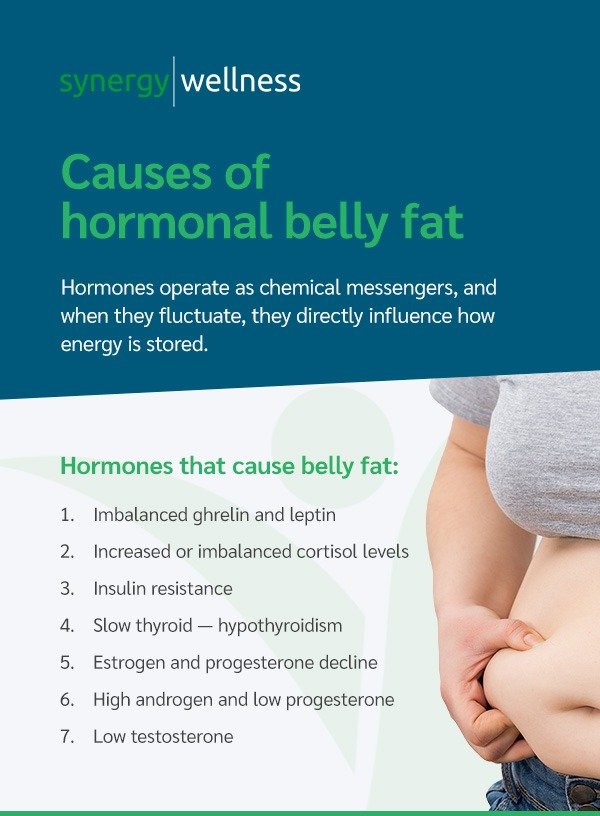
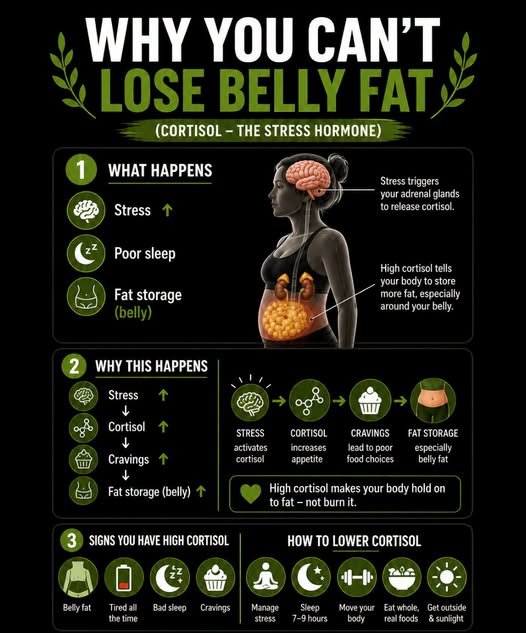
When life stays stressful for a long time, your body repeatedly activates its stress-response system. This involves cortisol, a hormone that helps your body respond to pressure. Cortisol itself is not bad. You need it for normal body functions. The concern is what can happen when stress becomes a regular part of everyday life.
Long workdays, poor sleep, emotional pressure, constant worrying, little physical activity, and frequent snacking can create a pattern that makes healthy weight management harder.
This is where the idea of stress-related belly fat comes in.
It does not mean that every person with a larger waist has a cortisol problem. It also does not mean you can look at your stomach and know whether your hormones are “unbalanced.” Instead, stress can influence several behaviors and body processes that may contribute to weight gain over time.
Why Does Stress Matter for Belly Fat?
Think about what happens during a stressful week.
You sleep later.
You move less.
You reach for convenient food.
You crave something sweet after a tiring day.
You skip your workout because you feel exhausted.
Then another stressful day arrives.
None of these choices alone will suddenly create belly fat. The problem is the pattern. When these habits continue for weeks or months, they can affect your total calorie intake, activity level, sleep, appetite, and body weight.
Research has also explored links between chronic stress, cortisol, and abdominal fat, although the relationship is complex and differs between individuals. That is why it is better to look at the complete lifestyle picture instead of blaming one hormone.
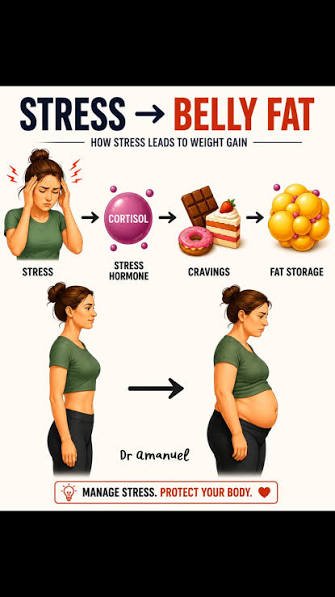
What Is Cortisol Belly Fat?
You may have seen terms such as “cortisol belly” or “cortisol belly fat” online.
These phrases are commonly used to describe abdominal weight gain that people associate with chronic stress and cortisol. However, “cortisol belly” is not a formal diagnosis that you can determine simply by looking at your body.
Cortisol is part of your body’s normal stress-response system. It helps regulate several important functions, including metabolism and blood pressure.
The issue is not that cortisol exists. The body needs it.
The more useful question is whether ongoing stress is affecting your sleep, appetite, food choices, recovery, and physical activity.
That distinction matters because chasing a supposed “cortisol belly” with quick fixes can distract you from the habits that actually support healthy weight management.
Stress Can Affect More Than Your Waistline
Stress does not always show up as an obvious feeling of panic.
Sometimes it looks like:
- Eating while distracted
- Constantly craving sweet foods
- Staying awake late at night
- Feeling too tired to exercise
- Sitting for several hours
- Skipping balanced meals
- Snacking whenever you feel overwhelmed
- Losing a consistent daily routine
Over time, these changes can make it harder to maintain a healthy body weight.
For example, imagine someone who normally sleeps seven to eight hours but starts getting only five hours because of work pressure. The next day, they feel tired and skip their morning walk. Later, they grab a sugary snack because they want quick energy. At night, they stay awake again.
The problem is not one cookie or one missed walk.
It is the cycle.
Breaking that cycle can be more useful than searching for a single food, drink, or supplement that supposedly melts abdominal fat.
Stress-Related Belly Fat Is Not the Same for Everyone
Bodies respond differently to stress.
One person may lose their appetite during difficult periods. Another may eat more. Someone else may experience changes in sleep or activity without noticing a major change in food intake.
Genetics, age, sex, body composition
3. How Stress and Cortisol Can Contribute to Belly Fat
Having belly fat does not automatically mean you have high cortisol. There is no simple rule that says stress goes up, cortisol rises, and belly fat immediately appears. The body does not work that way. However, long-term stress can influence appetite, sleep, food choices, movement, and other processes that may make weight management more difficult.
That is why understanding the connection is more useful than simply blaming hormones.
3.1 What Happens When You Feel Stressed?
Your body has a built-in response for dealing with stressful situations.
When something feels threatening or demanding, your brain signals the body to release stress hormones, including cortisol. This response can be helpful for short periods. It prepares you to deal with a challenge and then allows your system to settle once the pressure passes.
The problem can arise when stressful situations keep coming without enough recovery.
Work pressure, financial worries, family responsibilities, poor sleep, emotional strain, or a constantly busy routine can keep your stress response active again and again.
This is one reason researchers have studied the relationship between stress hormones and weight gain.
But there is an important point here:
Cortisol is not a fat-burning switch that suddenly turns your stomach into a storage area.
Instead, ongoing stress may create a collection of changes that make healthy habits harder to maintain.
3.2 Stress Can Change the Way You Eat
Have you ever had a difficult day and suddenly wanted something sweet, salty, or highly processed?
You are not alone.
For some people, stress changes eating behavior. Food can become a quick source of comfort, pleasure, or distraction. A busy day may also lead to skipped meals followed by overeating later.
This can create a cycle:
Stress → cravings → convenient food → overeating → guilt → more stress
Over time, repeated episodes can contribute to excess calorie intake and stress-related weight gain.
This is especially important when discussing stress eating and belly fat. The food itself is not automatically stored around your stomach because you are stressed. Rather, repeated changes in eating patterns can contribute to overall weight gain, which may include additional abdominal fat.
A useful first step is to notice why you are eating.
Ask yourself:
“Am I actually hungry, or am I trying to feel better?”
That small pause can help you recognize emotional eating before it becomes an automatic habit.

3.3 Poor Sleep Can Make the Situation Harder
Stress and sleep often affect each other.
You feel worried, so you stay awake.
You sleep poorly, so the next day feels harder.
You feel exhausted, so exercise becomes less appealing.
You become more dependent on convenient foods or extra snacks.
Then the same pattern continues.
This is why sleep and belly fat deserve attention when you are trying to improve your waistline.
Poor sleep can influence appetite, food choices, energy, and daily activity. It can also make a healthy routine harder to follow.
So if your goal is how to lose belly fat caused by high cortisol naturally, don’t focus only on food and workouts. Your nighttime routine deserves a place in the plan too.

3.4 Stress Can Reduce Everyday Movement
Not all physical activity happens in a gym.
Think about the small movements you make during a normal day:
- Walking to different rooms
- Taking the stairs
- Standing while working
- Shopping
- Cleaning
- Playing with children
- Walking outside
- Moving between tasks
During stressful periods, people may unconsciously become less active.
You may sit longer because you feel mentally drained. You may cancel your evening walk. You may spend your free time scrolling because you simply want to switch off.
One missed walk does not matter much.
But hundreds of small reductions in movement can affect your overall energy expenditure.
This is why exercise for stress belly fat should not mean punishing yourself with exhausting workouts. A regular walking habit, active lifestyle, and manageable strength routine can be much easier to maintain.
3.5 Chronic Stress Can Affect Your Overall Routine
Here is something many people overlook:
Sometimes the biggest problem is not cortisol itself. It is the lifestyle that develops around constant stress.
You might start waking up late.
Breakfast becomes rushed.
Lunch comes from a fast-food counter.
Water intake drops.
Your workout disappears.
Bedtime moves later.
Weekend eating becomes excessive.
None of these changes necessarily feels serious on its own. Together, however, they can create an environment where healthy weight management becomes difficult.
That is why reducing abdominal fat requires more than searching for a “cortisol-fixing” trick.
You need to improve the routine surrounding your body.
3.6 Why Visceral Fat Deserves Special Attention
Not all abdominal fat sits in exactly the same place.
Some fat is located directly under the skin. This is called subcutaneous fat.
Another type, known as visceral fat, surrounds organs inside the abdominal area.
Visceral fat is particularly important because excess amounts are associated with metabolic and cardiovascular health risks.
This does not mean you should panic every time your waist measurement changes. It simply means that waist health is about more than appearance.
The goal should not be:
“How can I make my stomach look flat as quickly as possible?”
A better question is:
“How can I build habits that support a healthier body composition over time?”
That shift can make your approach more realistic and sustainable.
3.7 Can Lowering Cortisol Naturally Help With Belly Fat?
If you search for how to lower cortisol and lose belly fat naturally, you will find countless quick solutions online.
Some promise a special drink.
Others promote expensive powders, detoxes, or supplements.
Be careful with these claims.
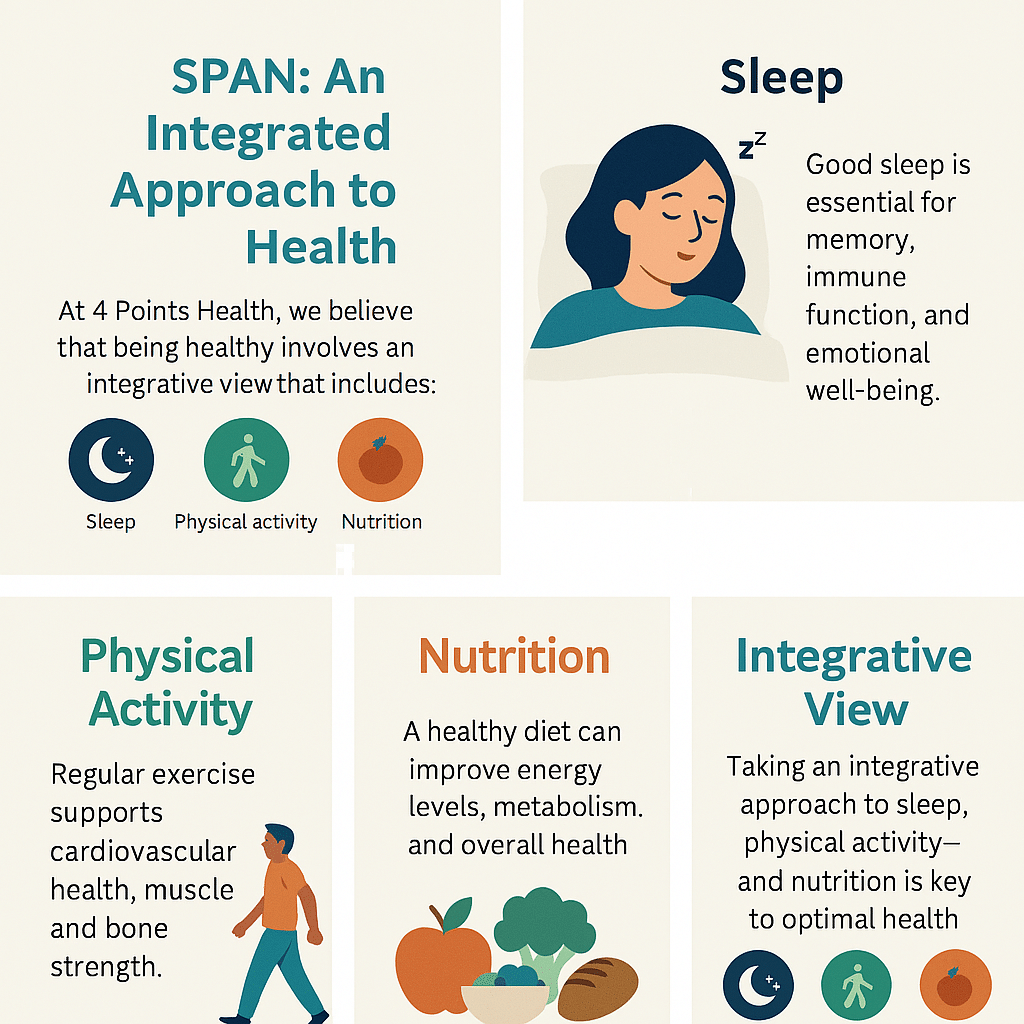
You do not need to “remove” cortisol from your body. It is a normal hormone with important functions. The practical goal is to support healthy stress regulation through habits such as adequate sleep, regular movement, balanced nutrition, relaxation, and recovery.
In other words, don’t chase a hormone number without understanding the bigger picture.
Your body is not a machine with one button labeled BELLY FAT.
It responds to many connected factors.
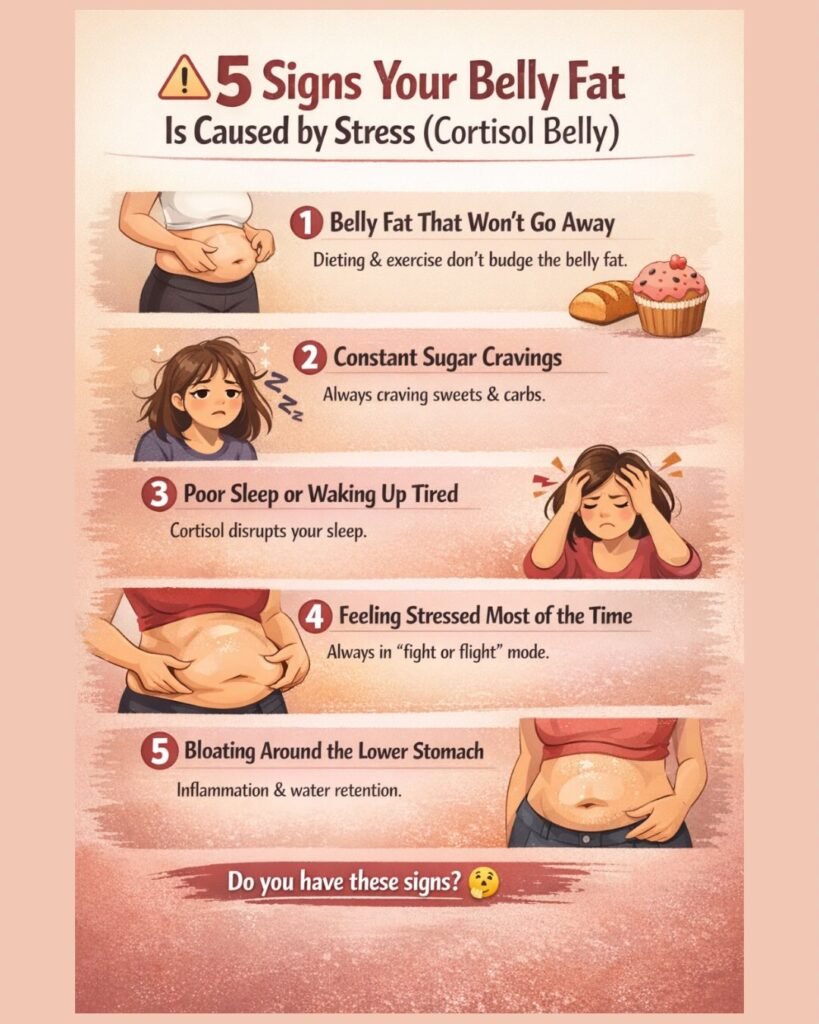
4. Signs Your Stress and Lifestyle May Be Affecting Your Belly Fat
A larger waist alone cannot tell you that stress or hormones are responsible. There is no visual test that can confirm high cortisol or a hormonal imbalance.
However, certain patterns can suggest that your current lifestyle deserves a closer look.
The key is to notice several changes happening together rather than focusing on one symptom.
4.1 You Feel Stressed Most of the Time
Do you wake up already thinking about everything you need to handle?
Do you rarely feel mentally relaxed?
Are you constantly rushing from one task to another?
Persistent stress may affect your daily habits even when you don’t notice it happening.
You may become less active, eat more frequently, sleep poorly, or find it difficult to prepare nutritious meals.
If this sounds familiar, improving stress management may be an important part of your weight-management strategy.
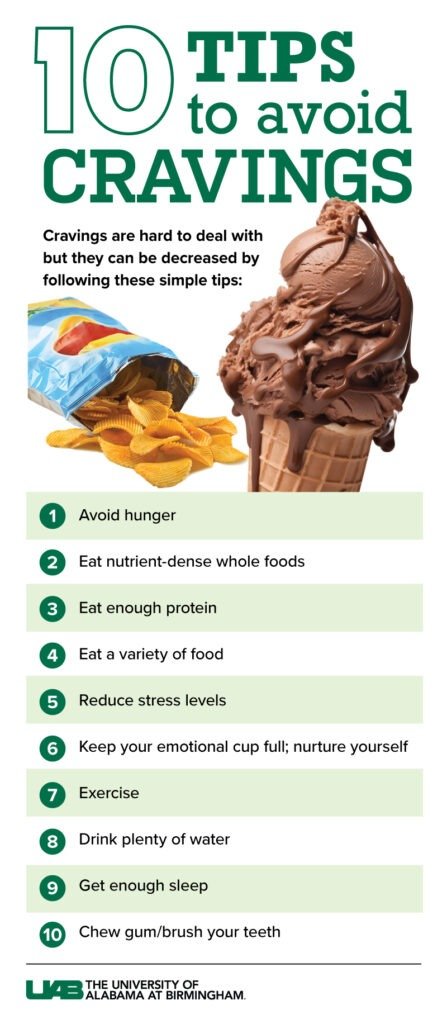
4.2 Your Cravings Become Harder to Control
A sudden desire for chocolate after a difficult day does not mean something is wrong.
But frequent cravings can become a problem when they happen every day.
You might notice that stressful situations trigger:
- Sugary snacks
- Fried foods
- Fast food
- Sweet drinks
- Late-night eating
- Large portions
This pattern can be a sign of emotional eating and weight gain rather than simple physical hunger.
Try keeping a simple food-and-mood note for a few days.
Write down:
Time → What you ate → Hunger level → Mood
You may discover that certain situations repeatedly trigger unnecessary eating.
That information is useful because you can work on the trigger instead of simply blaming yourself for the food choice.
4.3 Your Sleep Schedule Is All Over the Place
Going to bed at different times every night can make your routine difficult to manage.
Maybe you sleep at 11 p.m. one night, 1 a.m. the next, and 3 a.m. on the weekend.
If stress is keeping you awake, the problem can become even more frustrating.
Look for patterns such as:
- Difficulty falling asleep
- Waking frequently
- Staying on your phone late at night
- Feeling exhausted after waking
- Depending heavily on caffeine during the day
Remember, poor sleep does not prove that cortisol is high.
But improving sleep can still be a smart step toward better appetite control, energy, recovery, and healthy weight management.
4.4 You Have Stopped Moving as Much as Before
Maybe you used to walk every evening.
Now you spend most of the day sitting.
Perhaps you once enjoyed weekend activities but now stay indoors because you feel mentally drained.
This reduction in movement can happen quietly.
You may not think of yourself as inactive because you still complete your normal responsibilities. Yet your total daily activity may have dropped considerably.
Try adding small movement opportunities instead of waiting for motivation.
A ten-minute walk is still movement.
A few minutes of stretching still count.
Taking the stairs still counts.
These small choices can gradually rebuild an active routine.
4.5 Your Eating Schedule Feels Chaotic
Some people under-eat during busy hours and then feel extremely hungry at night.
Others snack throughout the day without having proper meals.
Neither pattern automatically means hormones are responsible.
However, an unpredictable eating routine can make it harder to notice genuine hunger and fullness signals.
A simpler approach can help:
Build meals around protein, fiber-rich foods, vegetables, whole foods, and satisfying portions.
You don’t need a complicated diet chart to begin.
4.6 Your Waistline Has Gradually Increased
A gradual increase around your middle can happen for many reasons.
Age can play a role.
Reduced activity can matter.
Dietary changes can contribute.
Sleep may influence the picture.
Stress can affect eating and movement.
Hormonal changes can also be relevant in some people.
That is why hormonal belly fat should not be assumed simply because fat is concentrated around the abdomen.
Look at the complete picture.
Ask:
- Has my activity decreased?
- Has my food intake changed?
- Am I sleeping less?
- Have my stress levels increased?
- Has my routine become irregular?
- Have other physical symptoms appeared?
These questions provide much more useful information than simply staring at the scale.
4.7 You Keep Starting Diets but Cannot Maintain Them
This is another overlooked sign.
You begin a very strict plan on Monday.
By Wednesday, you are exhausted.
By Friday, cravings become intense.
Over the weekend, you eat whatever you avoided during the week.
Then Monday arrives again.
This cycle has little to do with willpower.
An overly restrictive approach can be difficult to maintain, especially when you already have high stress.
Instead of asking:
“How quickly can I lose this belly fat?”
1. How can I reduce belly fat caused by stress and hormones?
Start with the basics instead of looking for a quick fix. Improve your sleep, manage daily stress, eat balanced meals with enough protein and fiber, stay active, and include strength training and regular walking.
Stress can affect eating habits, sleep, and physical activity, which may make weight management harder. So, working on these areas together can be more helpful than focusing only on your stomach.
2. Does high cortisol cause belly fat?
High cortisol can be linked with increased abdominal fat, but belly fat does not automatically mean your cortisol is high. Stress, diet, sleep, activity level, genetics, age, and other factors can all play a role.
That is why you should not assume you have a hormone problem simply because you carry extra fat around your waist.
3. How do I lower cortisol naturally to lose belly fat?
You do not need a special “cortisol detox.” Focus on healthy habits that support normal stress regulation.
Try getting consistent sleep, exercising regularly without overdoing it, eating nutritious meals, taking short breaks during stressful days, practicing slow breathing, and reducing emotional eating. Better sleep and healthier routines can also support weight management.
4. What foods help reduce stress-related belly fat?
There is no single food that burns stress-related belly fat. Instead, build meals around protein, vegetables, fruits, whole grains, beans, nuts, seeds, and other minimally processed foods.
A balanced diet can also make it easier to control hunger and reduce frequent cravings for highly processed, calorie-dense foods.
5. Can poor sleep increase belly fat?
Yes, poor or restricted sleep can make healthy weight management more difficult. Research has found that sleep restriction can increase food intake and has been associated with greater abdominal fat accumulation.
So if you are trying to reduce belly fat, do not focus only on workouts and food. A consistent sleep routine is an important part of the bigger picture.