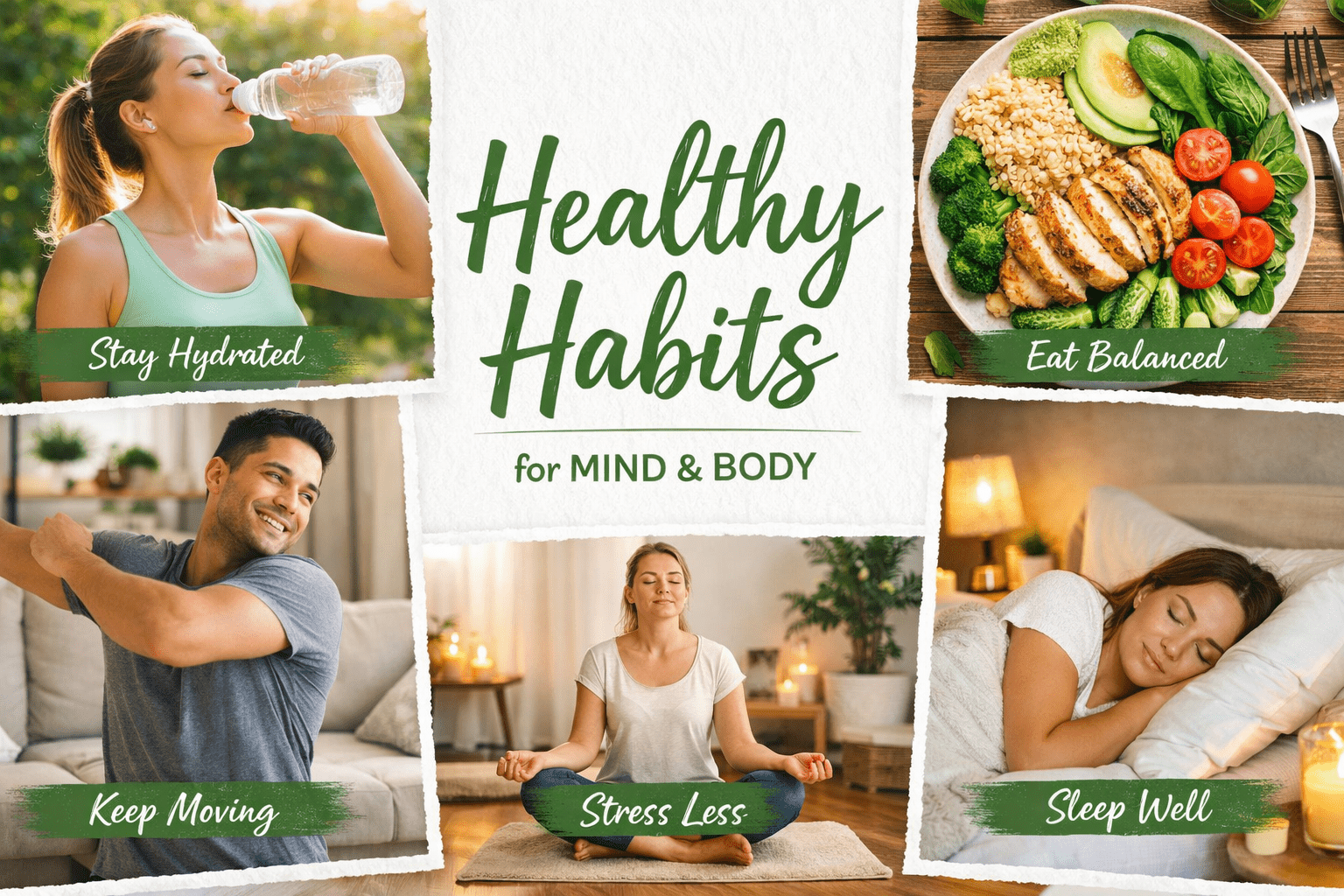
Many people think healthy living means strict diets or intense workouts. That’s not true. You don’t need to change everything at once. Real health comes from small daily actions that are simple and doable. Positive health habits are the key—they quietly boost energy, focus, and overall well-being over time.
The problem? People chase quick results. They start strong, feel overwhelmed, and quit. Sustainable health isn’t about motivation; it’s about routines that work even on busy or low-energy days.
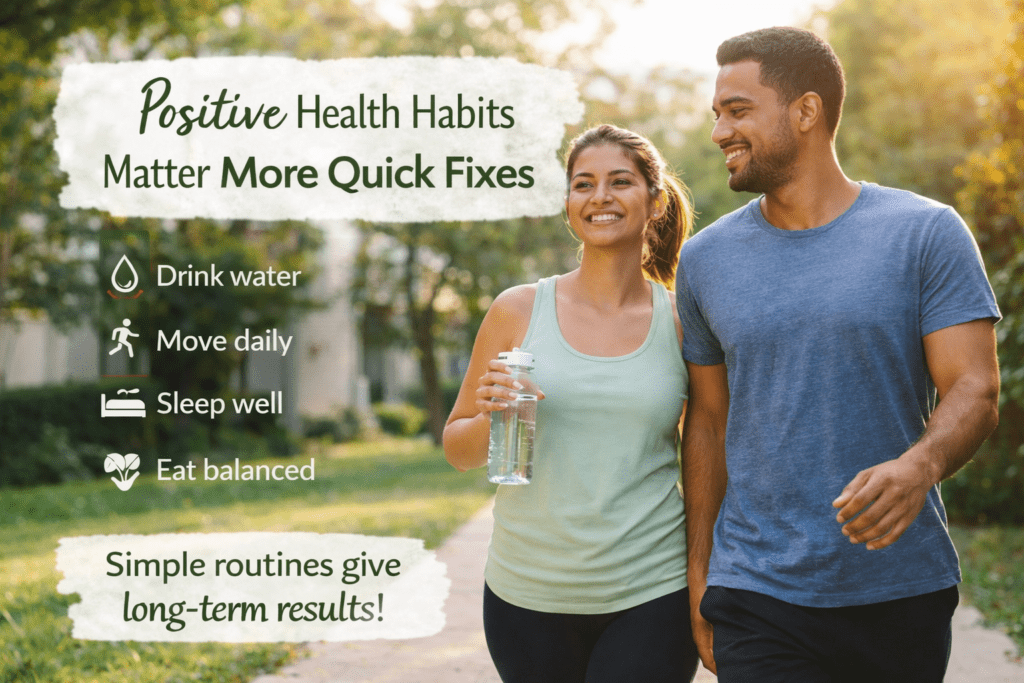
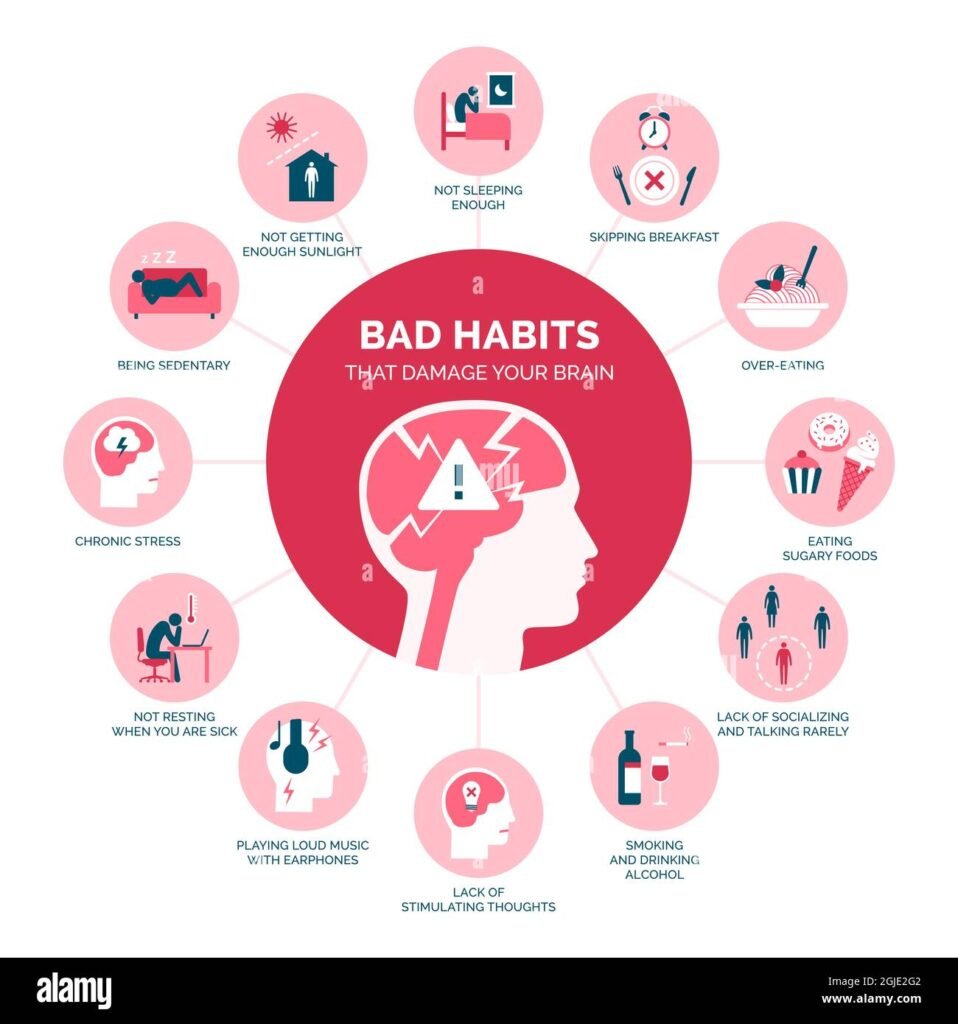
In today’s fast-paced world, unhealthy habits—sitting too long, poor sleep, stress eating—are normal. Building positive habits now protects your mind and body from burnout and long-term health issues.
Even small habits matter. Drinking water, moving a little, sleeping well, eating balanced meals—they take minutes, but the results compound. Over time, these habits create a lifestyle that feels natural, not forced.
Healthy living isn’t about perfection. It’s about building routines that fit your real life. Once you understand how habits work, creating a positive, sustainable lifestyle becomes easier.
What Are Positive Health Habits?
Positive health habits are small, repeatable actions that support your body, mind, and emotions. They don’t require extreme effort or endless motivation—they work because they become part of your daily life.
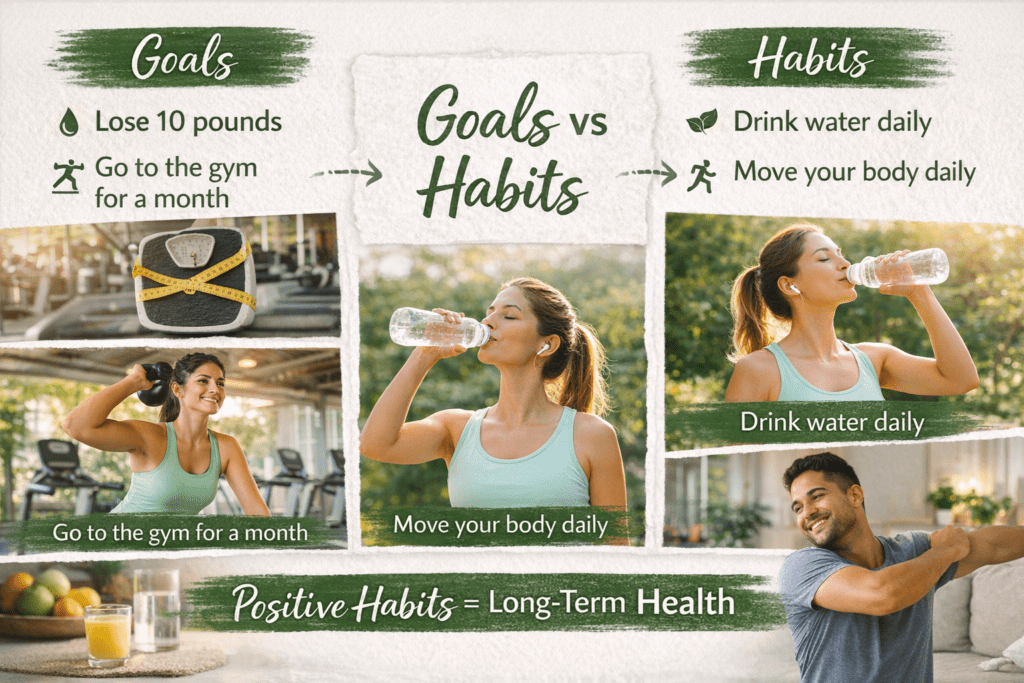
A common confusion is between goals and habits. Goals are what you want to achieve; habits are what you do every day. For example:
- Losing 10 pounds is a goal, but drinking water daily is a habit.
- Going to the gym for a month is a goal, but moving your body daily is a habit.
Habits sustain results long after motivation fades. That’s why positive habits for long-term health matter more than chasing short-term fixes.
Key Principles of Positive Health Habits:
- Consistency over intensity – You don’t need perfect meals or extreme workouts. Small, regular actions matter most.
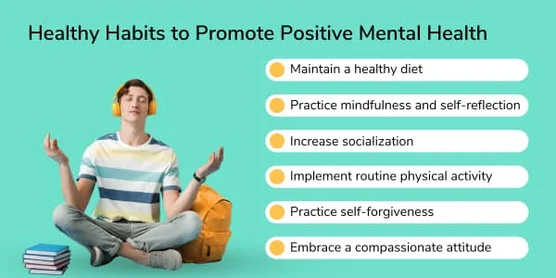
- Balance – True wellness supports both body and mind. Mental wellness habits like mindfulness, gratitude, and stress management are just as important as physical activity.
- Adaptability – What works for one person may not work for another. Habits should feel realistic and flexible.
- Compound effect – Even replacing one unhealthy habit with a positive one creates noticeable change over time.
How Daily Habits Create a Healthy Lifestyle
Many people think a healthy lifestyle requires massive changes all at once. That’s a myth. Daily habits are the building blocks of lasting wellness.
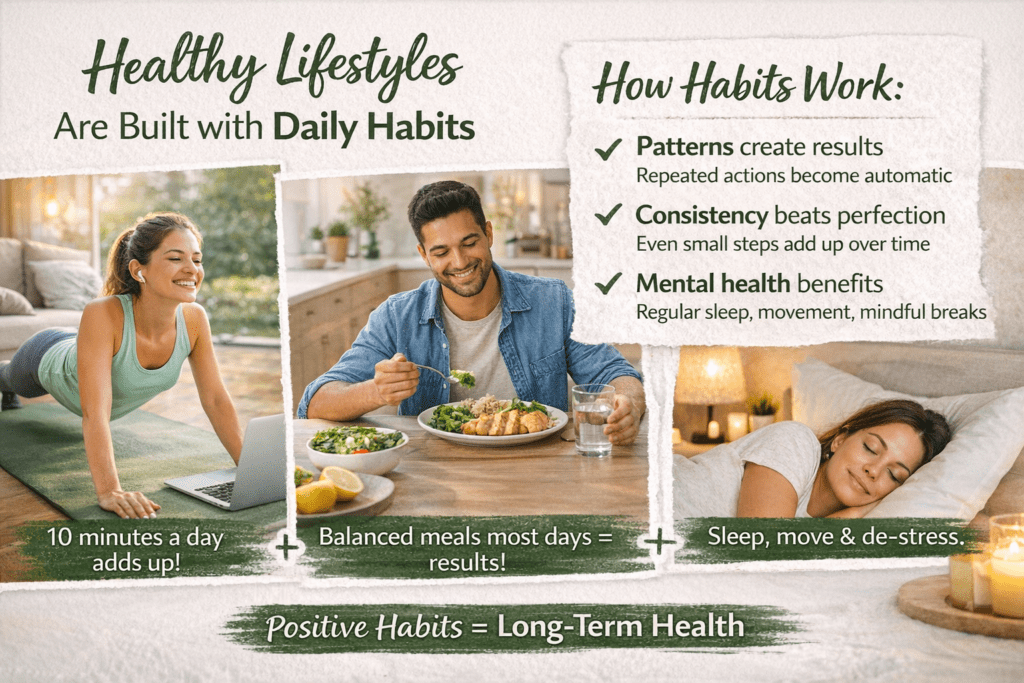
One workout won’t transform your body—but 10 minutes of movement every day will. One healthy meal won’t change your energy—but balanced meals most days of the week will.
How Habits Work:
- Patterns create results: Repeated actions become automatic, reducing reliance on willpower.
- Consistency beats perfection: Ten minutes of daily movement is better than an hour-long workout once a week.
- Mental health benefits: Regular sleep, movement, and mindful breaks naturally reduce stress, improve focus, and enhance mood.
Patience is key. Habits don’t deliver overnight results, but over weeks and months, they transform your life. Eventually, a healthy lifestyle becomes effortless.
Positive Health Habits for a Healthy Lifestyle
Here’s a breakdown of practical, actionable habits that really work:
Simple Daily Health Habits
- Hydration: Drinking enough water supports digestion, energy, and mental clarity. Aim for at least 6–8 glasses a day.
- Movement: Walking, stretching, or light exercise keeps your body active and reduces stress.
- Balanced meals: Focus on whole foods—fruits, vegetables, protein, and healthy fats—rather than strict restrictions.
Tip: Keep a water bottle handy and set reminders to drink. Small nudges help build consistency.
Healthy Morning Habits
- Wake up at a consistent time to regulate your body clock.
- Include light movement like stretching or a short walk to boost energy.
- Take quiet moments for mindfulness, journaling, or gratitude to set a positive tone for the day.
Example: Sarah starts her mornings with 5 minutes of stretching and a gratitude journal. It’s quick but sets her up to feel focused and calm for hours.
Healthy Eating Habits
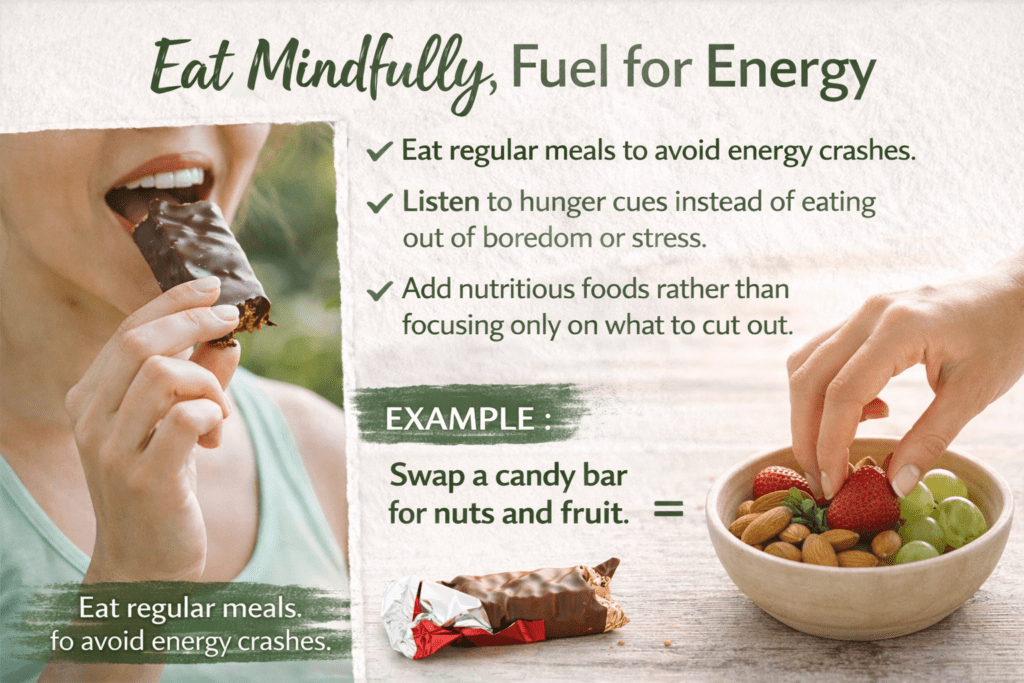
- Eat regular meals to avoid energy crashes.
- Listen to hunger cues instead of eating out of boredom or stress.
- Add nutritious foods rather than focusing only on what to cut out.
Example: Swap a mid-afternoon candy bar with a handful of nuts and fruit. It’s a small change but helps regulate blood sugar and reduce cravings.
Physical Activity Habits
- Move daily—even 10–15 minutes counts.
- Choose activities you enjoy: walking, yoga, dancing, or home workouts.
- Focus on consistency, not intensity.
Tip: Pair movement with entertainment—walk while listening to a podcast or dance to music—to make it enjoyable.
Mental Wellness Habits
- Practice mindfulness, deep breathing, or gratitude daily.
- Take short breaks throughout the day to reset your mind.
- Reduce screen time, especially before bed, to lower stress and improve focus.
Scenario: Jake used to scroll social media for an hour after work. He replaced it with 15 minutes of meditation and noticed he felt calmer and slept better.
Sleep Habits
- Go to bed and wake up at consistent times.
- Avoid screens at least 30 minutes before bed.
- Create a calming night routine—read, stretch, or journal to signal your body it’s time to sleep.
Tip: Quality sleep strengthens immunity, mental clarity, and physical recovery.
Advantages of Positive Health Habits
Better Physical Health
Small, consistent habits improve strength, flexibility, and daily comfort without extreme diets or workouts.
Long-Term Energy
Regular wellness habits reduce fatigue and dependence on caffeine, helping you stay energized naturally.
Improved Mental Health
Daily routines support emotional balance, reduce stress, and improve focus.
Stronger Immunity
Healthy habits lower the risk of lifestyle-related diseases and make your body more resilient.
Better Sleep and Recovery
Consistent routines improve sleep quality, aiding both physical and mental recovery.
Sustainable Lifestyle
Habits that fit your real life prevent burnout and guilt, making wellness sustainable.
Increased Confidence
Consistency builds self-discipline naturally, boosting confidence over time.
Disadvantages (Honest Reality Check)
Slow Results
Habits take time. Those expecting overnight changes may feel impatient.
Requires Consistency
Skipping days slows progress. Discipline is essential, especially at the start.
Lifestyle Adjustment
New routines may feel awkward initially, and breaking old habits requires effort.
Personal Commitment
No external shortcut exists. Results depend on your dedication.
Social & Environmental Challenges
Busy schedules, social pressure, and unhealthy environments can make habits harder to maintain.
Why Advantages Always Outweigh Disadvantages
Disadvantages are temporary. Over time, habits become automatic, and benefits grow stronger. Better energy, mood, immunity, sleep, and confidence eventually make a positive health lifestyle effortless.
Even small, consistent habits compound to create long-term wellness. The key is to start simple, stay consistent, and adjust gradually to your life.
Tips to Make Habits Stick
- Start small – Begin with one habit at a time.
- Make it enjoyable – Pair habits with things you like.
- Track progress – Celebrate small wins.
- Replace unhealthy habits gradually – Don’t aim for perfection.
- Be patient – Long-term benefits compound over weeks and months.
1. What are positive health habits for a healthy lifestyle?
Positive health habits are simple daily actions that improve your body, mind, and overall well-being. They include things like eating balanced meals, moving your body, sleeping well, and managing stress. These habits are small but powerful, and over time they build a healthy lifestyle that sticks.
2. How can I start positive health habits without feeling overwhelmed?
Start small. Pick one habit at a time, like drinking enough water or walking for 10 minutes daily. Focus on consistency instead of perfection. Over weeks, these habits naturally become part of your daily routine, and you can gradually add more.
3. How long does it take to see results from healthy habits?
Results don’t appear overnight. Small habits compound over time. Usually, you can notice better energy, mood, or focus in a few weeks. Physical changes may take a few months. The key is to stay consistent and patient.
4. Can positive health habits improve mental health too?
Absolutely! Habits like regular sleep, mindful breathing, gratitude journaling, and light daily exercise reduce stress and improve mood. When your mind feels balanced, it supports your overall healthy lifestyle.